Showing posts with label Wine. Show all posts

Saturday, April 4, 2015

Viña Ardanza 2004 Rioja Reserva

Producer: La Rioja Alta S.A.
Name: Viña Ardanza 2004 Reserva
Varietal: Tempranillo
Region: Rioja D.O.C., Spain
Vintage: 2004 Reserva
Tasted: February 18, 2015
ABV: 13.5%

It was August, 2007. A co-worker friend and I were sitting at a hotel bar in South Beach, Florida, after the first day of a trade show. We decided to relax over a bottle of wine, and he, knowing that I knew all sorts of things about libations and had a decent palate for them, asked me to choose the wine. But this was long before I had ever considered entering the wine world, and in fact, I was only a few months out of college, where whatever wine we drank was, let’s say, not quite fine. So, what my friend did not know, because I had cultivated a façade to the contrary, was that my wine knowledge was barely a step and a half above that of a casual guzzler, and that I was unfamiliar with every last producer on the hotel’s wine list.

I did, however, know what to expect from a good Rioja. There were a couple on the list, and I picked the one that said "Reserva" on it, to up the odds that it would be a good one. I was also sure to order it with a self-consciously confident trill in the Spanish language for the sake of my audience, you know, just to put a bow on how well versed I was in everything I was doing. (To give you an idea of how preposterous that was: among the bartender, my friend, and myself, I was the only non-native Spanish speaker, and we all knew it.)

Out came the wine, pop went the cork, and with a toast to health and life, my friend and I took a sip. It was outrageous. Starting out sublime, it just got better and better as the minutes and hours ticked away. As best as I can remember, tannins and fruit managed somehow to surround each other, and the herb notes, which were strong, brought balance and complexity to the whole thing. The wine was dark but not heavy at all, and the interaction of the notes, which were in constant (though not frenetic) motion relative to each other, just made the whole thing beyond belief.

I had always liked wine and I had always liked Rioja, but now I loved wine and loved Rioja. To this day Rioja remains my favorite type.

The wine in question was Viña Ardanza Reserva 2004. We were sure to write it down, but when we got back to New York neither of us could find it in any wine shop. A few months later I read somewhere that it had sold out. Sorely disappointed, I gave up the search, hoping perhaps to stumble across it again somewhere in the future, but not expecting to.

Fast-forward to the present day, minus two or three months. I am still no sommelier by any means, but I am a wine representative for Angels’ Share Wines, so I have been exposed to the best, and know my way around a wine conversation. The love of my life asks me if I will accompany her into a wine shop near her work and help her choose holiday gifts for her employers. In the shop, which was new to me as a consumer and outside my professional territory, I find a couple of wines from ASW’s book and recommend them to the lovely lady.

And then I see them. Two bottles of Viña Ardanza Reserva 2004 sitting on the shelf in the Spanish section. I must have spent twenty minutes staring at them, just to make sure they were in fact what I thought they were. The store charged me $35 each; as far as I am concerned, it should have charged a hundred times as much.

Those who know me must be so proud: I, the least patient and most goofily impulsive man on planet Earth, did not head straight home, fly through the door, rip out the cork on the fourth or fifth try, and pour the wine across countertop, glass, and floor. In fact, I did not even open them that evening or weekend. I put the bottles on my shelf and let them sit there for a few weeks until it was the right time to try them: a slow evening that I had all to myself, a full stomach, and the right mood to really sit back and feel out a wine.

I set the bottle on the table and looked at it. It was really cool to see my first wine love right in front of me. "This is what it’s all about," I thought. But what if it disappoints? That's the kind of negative thinking to which many aficionados – of anything, not just wine – fall victim when preparing to experience a personally meaningful find. It is also a thoroughly pointless type of concern. "Don't bother with expectations," I told myself. "Just dive on in and have fun with it." And so I did.

At a little over ten years of age, the Reserva is different, but no less sublime. The aroma shows it age beautifully. I won’t quite say that it does so gracefully at first – it is in a funky sort of age – but in a good way, as an older person who still has verve and energy and life. The notes are of typical Rioja herb and spice, principally cedar, very nicely expressed. These fruits, are they all awry? No, but they are old. Strawberry and plum, and oh, some vanilla! Oak, welcome! These aroma notes all come out evenly, well balanced, and sophisticated (or, at least, properly complex; maybe even impressively so). The oak, which can easily dominate a wine like this, does no such thing just yet.

The most striking thing about the palate is how light it is – I found it to be no heavier than a Pinot Noir. But the Tempranillo notes hold up, and together, perfectly. The fruits and oak are identical to the corresponding notes on the nose; the spice is similar, but more pungent, though without overwhelming anything else. The tannins and acidity are both moderate, and quite lovely. The tannins, in fact, play especially well with the fruit, and the other notes also get along quite nicely together. This whole is many times greater than the sum of its parts.

What a superb wine.

After breathing for twenty minutes, the Reserva’s nose mellows out a little, with the oak emerging as the dominant note. The fruits have not changed even an iota; the herb/spice, though, has nearly dissipated. The palate remains light as ever, with increased acidity, and unchanged or perhaps even diminished tannins. Oak prevails much as it does on the nose, but here it has teamed up with the herb/spice of cedar etcetera, while the fruits have become little more than an undercurrent. The specific notes have not changed, though the oak, being so augmented, has opened itself up to much more nuance than the simple sliver of vanilla that we had twenty minutes ago.

I cannot express strongly enough how insufficient the written word is to describe the sublimity of the Viña Ardanza 2004 Rioja Reserva. I can pile adjective upon adjective; I can blither on with aroma and tasting notes; I can depict the scene and create the mood to make everything come together; and so I have. Or I could have stuck with pith: “The ’04 has gotten light in its old age, showing tannins and acidity, and combining with artful sophistication fruits, herb, and an oak profile that starts small but comes to dominate after only a short while of aeration. Good show!”

None of it is good enough. With poor wine, describing the notes is pointless, unless as an exercise. With good wine, fleshing out the tasting notes becomes a ton of fun, and also a very useful tool in that people can distinguish it from similar wines and know what to expect if they pair it with food and/or occasion. But with wine at a higher plane, bothering with such words becomes pointless again: The wine has transcended so far past the sum of its parts that to focus on those parts actually distracts from accuracy and relevance. The only way to know what a wine like this tastes like is to actually taste it.

I have written this article because I love writing, especially about wine and other beverages; I have wanted to contribute again to The Nice Drinks In Life for a long time now; and as soon as I sipped the Ardanza I knew it would be too much to resist pouring my heart into a paean to it as a renewal of my activity on the site. But I would be wrong not to include this disclaimer, if you will. The wine is above the words about it. It is just better. Better than what? Yes. It makes me weep. I actually got choked up (and no, it did not go down the wrong pipe or anything).

Shortly after I had the first bottle, I took the second to my parents' house to drink with dinner. They are Rioja people, in that they typically drink whatever popular-label current vintage is on the store shelf. Don’t get me wrong; though I am a snob, I drink those Riojas, too. But I was concerned that this older, unknown (to them) Rioja would disappoint them, which would embarrass me a little. It is lighter than young Riojas by a lot; oakier after a short while; just different. Would they like it?

They loved it. My dad snapped a picture of it on his phone to show his friends. I heard about it for a week. Even my mom, somewhat less adventurous than others in her family, took a second glass. All listened as I told them the story from Miami in between sips, and then we took the occasion to recall a few Riojas that we drank together in Spain on a trip some years back.

That evening was everything that is special about wine, everything for which we wine lovers stand. Everything. So is the Viña Ardanza 2004 Rioja Reserva.

Sunday, June 1, 2014

An Adventure with Carmenère

Reading old reviews and articles about Carmenère – even some that are not so old, in fact – one sees hope that the grape will, as it is improved and perfected by Chilean growers and winemakers, graduate from blending grape to a stand-alone varietal in its own right. Such an outlook appears, in 2014, quaint and nostalgic, rather like reading a scouting report about a college athlete after he is already a veteran of the big leagues.

Carmenère today accounts for some 10% of Chilean wine production. That may not seem like much, especially if compared to Cabernet Sauvignon, which weighs in at over 40%. But compared to where it was just a little while ago, Carmenère is doing phenomenally; before 1997, it was not counted at all. Truly, Carmenère has come a long way in such a short amount of time.

In fact, the grape's recent ascendancy in Chile as a high quality varietal is just the latest leg of a much longer journey, begun in the plains of Bordeaux a couple hundred years ago. Carmenère was a minor celebrity in the Médoc as a blending grape. In the larger region it was, though not especially obscure, somewhat marginalized due to both the prominence of so many other grapes there and the difficulty of growing it properly. It requires more time than most varietals to ripen properly, and waiting for those extra days to get it just right opens up vulnerability to early frosts, which ruin everything. After phylloxera pulverized the region and the farmers more or less started over from scratch, they did not really bother with Carmenère again, even in the Médoc.

But right in the nick of time, just before the upheaval, some Carmenère vines found themselves aboard a ship headed for Chile. In that slice of the New World, some enthusiastic winemakers (and wine drinkers) were overseeing the creation of an Andean viniculture. French varietals of all sorts were brought over, planted, made into wine, tasted, refined, tasted again, refined again, and so on. It would be a long time until Chilean wine achieved the high quality that it has today, but Carmenère had found a new home in which it could safely await its moment to shine. Phylloxera never made its way to Chile, and the longer growing season there proved perfect for the varietal.

The story did not quite end there, however. There is a remarkable twist before the odyssey comes to an end. As Chilean wines became the focus of increasing attention in recent decades, concerns arose that certain vines producing what had been thought to be Sauvignon Blanc were in fact producing the inferior Sauvignon Vert. (The latter is also known as Sauvignonasse; the suffix –asse in French denotes a pejorative.) These concerns were confirmed by experts.

In the course of their investigations into the various Sauvignons, those same experts stumbled onto another item of confusion. They noticed that the leaves of many Merlot vines had an exceptionally pinkish hue compared to what is normal for the varietal. It was not long before the explanation presented itself: What makers (and, one can only assume, drinkers) of Chilean wine had always thought to be Merlot was in fact none other than our intrepid protagonist, Carmenère.

How such confusion came about is uncertain. Maybe some amateurs unloading the shipments from France back in the 1800s missed a label or something. But it really is remarkable how the mistake was not noticed much earlier. Carmenère takes a substantially longer time to ripen than Merlot, and in the glass tends to be a bit heavier, less fruity, and more floral than its erstwhile pretension.

But it is all too easy to jump to judgment about Chilean viniculture in the face of this snafu. Such luminaries in the wine world as Karen MacNeil, Jancis Robinson, and the late, great Frank Prial have all written about it without even raising an eyebrow as to the mix-up not being noticed sooner, and I think it is safe to say that they all know something – many things – that I do not.

Furthermore, this is not the only instance of Carmenère successfully masquerading as something else; the Old World has its own examples. We learn from Jancis Robinson in The Oxford Companion to Wine that in north-east Italy many vines of what was thought to be Cabernet Franc are in fact none other than our chameleonic friend. This is on the face of it no less egregious than the confusion with Merlot: yes, both Cabernet Franc and Carmenère started out jointly contributing to the prestige of the Médoc and larger Bordeaux; and yes, both share an etymological root (Cabernet Franc was once known as Carmenet in the Médoc; the root refers to the color carmine); but the real Cabernet Franc ripens somewhat early and is light, a bit less than medium bodied, and fruity while Carmenère ripens late and is dark, full-bodied, and herbaceous.

And yet, the experts pass no judgment. For that reason as well as more scriptural ones, neither shall I.

In any event the Chileans, or at least those whose Merlot was no such thing, found themselves in a real spot. Confirmation of their error came in 1994, right as a craze for Merlot was conspicuously burgeoning in the US (Chile's principle wine export market) and elsewhere, and as Chile's reputation in the wine world was set to grow. It was more than a small error: some estimates put the percentage of mistaken vines at 70% or more of the country's "Merlot". Initially there was a bit of a panic, including the human capacity for denial; authorities finally admitted the truth in 1997. And as late as 2001, Karen MacNeil and Frank Prial noted that many Chilean Merlots still contained a sizeable percentage of Carmenère.

But also by that time, a certain realization about the virtues of Carmenère came about. Cooler heads sat back and considered: If Chile’s reputation in the wine world has been growing in the past few decades, and if Carmenère has been a major part of Chilean production during this time, then is it not possible – likely, even – that there is much to be said for the varietal? It had a respectable history in one of the world's most venerated wine regions. The list of Chilean Merlots in which Carmenère was blended even after the public confession included the highest rated and most in demand. Clearly, this was no second-tier grape. Not to mention, the long Chilean growing season turned its late ripening from a liability into a perfect fit, and its abandonment elsewhere in the world gave it a uniqueness on which Chile could capitalize, a distinguishing factor with which the country could stand out.

Those cooler heads soon realized that what they had, far from a problem, was a golden opportunity. Their countrymen concurred. And Carmenère went almost overnight from unknown to denied to embraced.

So what exactly is this adventurous actor of ours? What does it taste like, what is its personality? What are we dealing with here? I tasted three Carmenères from different regions and of different ages.

Producer: Concha y Toro
Name: Casillero del Diablo Reserva
Varietal: Carmenère
Region: Rapel Valley, Chile
Vintage: 2011
Tasted: March 26, 2014
ABV: 13.5%

The first of the three was a gift from my cousin for my birthday last summer, a 2011 Casillero del Diablo Reserva grown in the Rapel Valley. Seven months later, convinced that it was in bottle for exactly long enough, I opened it up, and indeed the age was perfect. The wine was a deep, dark purple, and a very fragrant one at that. In fact, it was pungent – in fact, it was more than pungent, much more. Having turned my back from the opened bottle for all of two seconds, I could smell it from across the room, without actually having poured any yet.

The aroma had light notes of citrus, vanilla, and leather. Very few reds were present. Perhaps I detected a note of deciduous fruit. On the palate, however, there were many reds out and about: strawberry, other berries, a hint of cherry. The aroma notes were also present in the mouth, and there was spice as well. These three facets of the wine's profile balanced each other out beautifully; it did a great job turning complex components into a single simplicity. The body was about average for a red with 13.5% ABV; it held the flavors well, and did not insert itself into play.

After aeration the aroma, without losing any of its earlier notes, picked up a great deal of reds. The palate lost much of the spice, gaining in its place a certain smoothness; the balance from earlier seemed to have recalibrated itself quite perfectly in light of this switch.

The 2011 Casillero del Diablo Reserva is, without question, an excellent Carmenère. It comes very highly recommended.

Producer: Viña Errázuriz
Name: Single Vineyard, Max Reserva Estates
Varietal: Carmenère
Region: Aconcagua Valley, Chile
Vintage: 2009
Tasted: April 10, 2014
ABV: 14.5%

A couple of weeks later I had the 2009 Max Reserva Single Estate Carmenère from Viña Errázuriz, from the Aconcagua Valley. It, too, had a purple tinge, though being two years older than the Casillero del Diablo it was less dark. The aroma contained deep reds, principally strawberry and cherry, with a little bit of herby spice. Very minimal notes of vanilla and toffee rounded it out. The palate was spicy, full of red fruits, rhubarb, strawberry – it almost, in the strangest way, reminded me of a Chianti. The flavor was heavy, quite befitting a wine with 14.5% ABV, but the body was actually medium. And, I underlined in my notes, the flavors worked great together.

After aeration, the only difference was that the palate had acquired a bit of a lighter tone; nothing else changed at all.

The 2009 Max Reserva was another great example of how a Carmenère, composed of disparate tones and tasting notes, expertly fits them together into one, unified, harmonious experience.

Producer: Odfjell Vineyards
Name: Orzada
Varietal: Carmenère
Region: Maule Valley, Chile
Vintage: 2008
Tasted: April 16, 2014
ABV: 14%

Finally, a few days later, I sipped the 2008 Orzada Carmenère from Odfjell Vineyards in the Maule Valley. This wine looked brand new with deep, dark purple hues, but the nose and mouth could tell right away that it had been in bottle for a little while already. The aroma was of chocolate, vanilla, and leather, with floral musk. Not too many red fruits were present. The palate also lacked fruit, though it was bright, and mellow, with notes of toffee, chocolate, leather, coffee, and vanilla. Tannins were felt, and the wine was a tad heavy, though not too much. On the finish I detected strawberry – finally, a fruit!

After breathing for a while the Orzada’s aroma acquired some reds, lost the vanilla and florals, and mellowed out very pleasantly. The palate at this point had definitely become much more like the younger Carmenères; the rejuvenation was very clear. Red berries, strawberry, tannins joined a slight herby spice and the old notes of chocolate, leather, and florals, all together creating a harmonious whole much greater than the sum of its parts.

It is remarkable what a little aging in the bottle – and subsequent aeration – will do for a Carmenère. The breathing is more crucial as the wine sits in bottle for longer, but it suits the wine at any age, really. The herbs in the flavor give way to the fruits as it endures contact with the air, which only serves to illustrate the superb sophistication of the Carmenère. Its aptitude for uniting disparate elements – leather and strawberry?! – into harmony is really something special. For those who like to pair wine with food, just about any red meat will do, especially if grilled.

As I look back on those articles from a few short years ago, reading about all the high hopes that wine writers had for the varietal, I feel glad that Carmenère overcame the odds and achieved success in its own right. And indeed, those were not the easiest odds. Consider: it was a minor grape to begin with, overshadowed by giants in a land of giants; it was transported across the globe to a faraway land (even farther away before airplanes) where it was not clear that wine would ever have a place, while its remaining brethren were obliterated by phylloxera; it was completely and utterly forgotten about for almost a century and a half; and nearly the entire world’s first reaction upon its rediscovery was to recoil in unpleasant surprise. And in no time, it has risen to prominence and prestige, held highly by an entire country as a mark of distinction. Get your hands on some today to find out why. And enjoy.

Sunday, January 26, 2014

Wine & Advertising: Turning a Principle on Its Head

I would like to open this article with a disclaimer: My conclusions will not apply to every wine maker in the world. No strategy or concept could apply universally to all companies in a given field. As will be obvious, Lafite Rothschild will have no use for this; and, equally obvious but for different reasons, a brand new winery that can only fulfill orders for a handful of cases per year may also wish to demur. But I am confident that to the vast majority of wine makers, as well as wine importers, distributors, and retailers, the conclusions that I reach are very apt and important to consider.

Riding on the Long Island Railroad last summer, I saw a poster advertisement for Vitiano wine. I soon noticed a few such posters around various stations and train cars. And being both the oenophile and the astute marketing student that I am, I came to thinking: "Why is this the only advertisement for a wine that I have seen in as long as I can remember?"

In many cases the answer borders on the anthropological. The Spanish wine business expert Juan Luis Barrera Portillo was kind enough to grant me an interview a while back. When I asked him why so few Spanish wine labels engage in marketing or advertising, his answer was clear: Spanish wineries are generally hereditary proprietorships owned by major families, which have entire portfolios of business interests of which a winery is but one item, and which tend to assign management positions based on familial, social, or political considerations, resulting in leadership that may not either know much or care much about wine – or about business, for that matter. There are upstart exceptions, but they remain mere exceptions.

No doubt that is the predominant situation in Spain, and probably elsewhere, too. But there must be other reasons. There are too many wine labels, including young ones, in too many locations around the world for that to be the only explanation. Many wine labels are only a few decades old at most, and come from places with major traditions of marketing, such as the western USA. And what about importers, distributors, retail chains, trade associations, and other organizations that one would expect to boost marketing efforts? Some importers are small, local sales- and operations-based outfits, but others, such as Pernod Ricard, Diageo, and Kobrand ought to be churning out more brand images and concurrent communications than students like myself would know what to do with.

Am I being unfair? Am I noticing a lack of TV commercials and train billboards, and blowing it way out of proportion? Let's consider how I may be off base. I believe that wine companies would generally defend themselves with two key points.

Firstly, they would say that they do engage in plenty of promotions, such as point-of-sale material and/or wine store tastings, PR work with relevant magazines and other media, cooperation with restaurants, hosted events at the winery, participation in group tours (and of course availability for individual visits), perhaps some social media, and the occasional brand ambassador. Many wineries regularly feature restaurants at their facilities, or at least a kitchen capable of servicing the needs of concerts, workshops, and other such on-site events. Baiting Hollow vineyard on Long Island even has horse stables.

All of this is great stuff. Wine drinking is, by and large, a personal and intimate experience. Engaging the customers, well, personally and intimately is not only a good idea but an essential one. Reach out to them at the stores by having a real, live person offer a glass and a conversation. Pop up with some news as they browse the latest stories and information in their magazines and Twitter feeds. Meet them at a tavern for a sip with like-minded aficionados. Invite them into your home, show them around, offer them a glass of something that they can watch being made, and show them a good time. It all makes perfect sense.

But that cannot be the end of it. Intimate promotions, social media, and PR are all key tactics, but another layer of marketing and advertising must take place, too. For every person who buys wine because he/she loves knowing everything about it, there is a person is buying wine despite not knowing anything about it. For every person buying wine for him/herself, there is a person buying wine for someone else. And for every wine drinker who is social about wine, there are wine drinkers who do not actually care too much. It is the same as with other products: some people go to car shows, others say they like cars but would never bother; some people read tech reviews for fun, others claim to be interested but do not even know what model computer they have; and so on. Wines, I assert, have to brand themselves and engage in broad advertising if they want to succeed in capturing the attention and patronage of this second half of the market.

And to that assertion, as well as to my earlier ones, I believe wine companies would respond with a second point that is, ironically, a major marketing trend – in fact, marketing principle – championed by industry moguls and industry gurus alike, and which a peon such as myself must surely have some gall to address so directly. Basically the concept is to market not less but less broadly; to find a niche and cater to it in a personal and direct manner. For those familiar with the diffusion of innovation model, the principle points to the innovators at the beginning of the bell curve and identifies them as they key targets of marketing efforts; by capturing them, the brand establishes itself as analogous with the product category, generates the best buzz, and sets itself up for eventual popularity among the majority.

As the famous marketing expert Seth Godin has put it, promoting "average products for average people" is something to avoid. The same old things for the same boring people – the market is saturated with such products, and nobody is inspired by a message that reflects such things. "Be remarkable," Godin sums up.

I do not know if Godin, and the other marketing experts who adhere to this principle, had the wine industry in mind when they came up with it, but it is surely a case study in avoiding average products for average people. In most product categories, at least mature ones, expensive premium brands are a small percentage of production, and most money is made by selling to the majority – not necessarily by selling "average products" with average features or average brand images, mind you, but by acquiring a majority of people to the feasible pool of consumers by rejecting the aura of expense and exclusivity. Wine is a rare category of product (diamonds are another) in which both appearing as expensive and hoity-toity, and backing it up with as premium of a product as possible, is seen as the natural way to sell to most people.

And yet, so many wineries and vineyards continue with so many of the same methods of demonstrating superiority, that an ironic paradox has arisen in which they all blend in with each other again. It is as if there were a crowd of people, and, hoping to escape the crowded conditions, the people decided to move away – but each and every one of them ended up moving to the exact same place. The tactic failed to serve the principle.

Consider just one aspect of an average wine's image: the label, which I bring up advisedly for a reason soon to follow. What can be less remarkable than a wine with a fancy label on the bottle; with a story about some old aristocrat, lucky wayward adventurer, or bored millionaire; with a picture of an estate worth more than my entire ZIP code; with tasting notes that illuminate little in return for reading so dense it feels like homework; and with excess script lettering and a fine line between legitimate information and faux verbiage? Sure, such a bottle looks extraordinary sitting in the average wine drinker's kitchen, but on the shelf at the liquor store it is quite conspicuously unremarkable.

Some wine labels try certain tricks, but seeing modern art on the label, or the words "Fat Bastard" next to a hippopotamus, may make me notice the bottle, but does little to illuminate its contents, and rather misses the point about why wines appear unremarkable. They appear unremarkable because, for the average person, all that there is to know about them short of having drunk them already is to stare at the sea of bottles flooding the aisle in the store. And that is the fault of the wine makers, importers, distributors, and retailers. It is also an opportunity for some to jump ahead of the rest by making the masses think of their wines before even entering the store.

Godin and his intellectual ilk were almost certainly not talking about advertising when they developed their ideas; in fact, Godin explicitly condemns old-fashioned, basic advertising. But if we distill their work into a principle and apply it to wine, then what we have is the need to push remarkable products to average people through mass media. In order for the principle to be served, it needs to be turned onto its head.

Now, a caveat here, to address what I think many readers may be shaking their heads about: For people who are into wine – sommeliers, connoisseurs, aficionados, and adventurers – the label means little, and advertising would not mean much more. They already know what to look for with a wine. If anything, mass advertising would appear crass. It would make the wine seem like it aims for the lowest common denominator, like it were some modern manufactured product instead of an authentic historical tradition. Those predisposed to extreme sentiments may even feel that no self-respecting wine maker would engage in advertising, and no self-respecting wine lover would appreciate it. Forget for a moment that advertising has not detracted from the grandeur of diamonds, whisky, and other fine products. Wine is different, is it not?

To say that advertising would ruin it, of course, would be to diminish the importance of what is ultimately inside the bottle. If the advertising would mean nothing to many people one way or another, that is fine – it is true for most product categories, in fact. I see advertisements for dish detergent all the time, and I do not care because I intend to stick with the brand I already use. That hardly means that dish detergents should not advertise. Similarly, people who are really into wine already know what to expect from different regions and varietals, maybe even from different years. Advertising is not for them. But what about everyone else? Remember, for every wine drinker who already knows what he/she likes, there is someone buying a bottle for a friend, or looking to experiment, or simply not sure what to get.

A wine brand (maker/importer/distributor) should want the customer to walk into the wine store already confident about wanting to buy that brand, about what will be found in the bottle, about what it will mean to him/her when drinking it or what it will say about him/her when gifting it, and about how he/she will feel afterwards. Needless to say, the quality of the wine itself is what is paramount, but aside from that, as with any other product, the brand image already planted in the consumer’s mind has its own huge role to play in the experience. Intimate promotions, PR, and social media all are important. But frankly, the best way for a wine maker to have its brand image and product stand out and be remarkable in a segment nearly devoid of advertising is to engage in advertising.

How would this work? Well, I, no average dope myself, saw that Vitiano poster ad, and… bought some. I probably would not have otherwise, having been at the time in the midst of surveying various French wines. But I saw the ad, and I thought, "A wine I haven’t heard of? It might be nice for a casual evening? Sure, I'm game." It may sound trite to talk about "raising awareness," "educating the consumer," and all that. But when the customer goes into the wine shop and looks for a certain wine already in mind, then it will definitely stand out from the rest just by virtue of that fact. The sale is mostly made.

Alright, you get it. Enough. About the Vitiano, by the way: Both red and white are Umbria IGT, and made by Falesco. The 2010 red was a little disappointing. It shows its youth still, and while the aroma is pleasantly sophisticated and in fact quite promising, the palate comes off a little harsh, abrasive, overly-acidic. Breathing helped, which means that there is potential. But the wine needs another 18 months in bottle to mellow out before it can be given a fair assessment; for now, it is not great.

But the 2012 white – that one I like. The aroma offers a crisp bouquet of florals and fruits. Specific notes include apple, lychee, snapdragon, and an umbrella of citrus under which the other notes frolic. I say frolic, because the personality that comes about is the best feature. It is vivacious, while still balanced, and enticing. It knows what it is doing, it knows what it wants, and it is going to have a good time going to get it. Kind of like a lovely cougar getting up to dance.

The palate is, in a keen twist, much more mellow than the aroma, but still quite delightful. There are notes of honey, apple, and florals, and the wine is a bit buttery. The citrus has all but disappeared, and the lychee remains around the edges. All in all, it is a cornucopia stretching from spring until autumn. The body is even and balanced. The wine is ever so slightly acidic.

Falesco is typical of wineries today: a decent spot of land, fair business, a variety of wines to offer. Many would say that the principle business of such a winery – or any winery, for that matter – is to continue to strive to improve their wines and produce the very best libation possible. That "R&D", let’s call it, and production, are certainly crucial focuses for a winery. But as with any business, it is also important to be proactive in bringing in customers. It is the right thing to do for the employees, for the vendors, for the viticulturists and viniculturists and their work, even for the industry as a whole – for all stakeholders. The work has to mean something, it has to have a chance at success, and it has to be underwritten. Advertising is the best way, in the context of the wine world today, to set a wine apart from the rest and get the customer’s attention. Look again at the poster from the train. There is nothing about it to detract from an image of authentic bucolic tradition; on the contrary, it is a lovely depiction of a pleasantly romantic scene, perfect for wine. Falesco and Winebow, the importer, did well to take the simple step of putting up some nice posters. Other wines should follow suit.

Monday, August 19, 2013

Down Among the Long Island Vines

In my family, family comes first, just as it ought to. Blood is thicker than water, and even than wine. Yet I cannot help but notice: friends tend to give much better gifts than family. Gifts from both are thoughtful and loving, but they are still wholly distinct. There is what one wants to have, and then there is what other people want for one to have. Family and friends each are aware of both; yet they have different priorities. Family will get you what it thinks you need; friends do not waste birthdays on such things.

Having the blessed life that I do, I can count more than a few people as both family and friends. Most began as the former and soon became the latter; one family, in particular, began as the latter. I can still remember the first day I hung out with my best friend, Mike, back in the Little League days. "Hi, Camille!" I greeted his mother as I entered his home.

"Uh, excuse me, there, bud, you can call me Mrs. Kennedy," came the reply in a tone that was simultaneously stern enough to scare me and sweet enough to spoil me, a perfect combination that comes as naturally to this particular matriarch as cooking and hosting, and that I have yet to hear successfully replicated by anyone else on the planet. So "Mrs. Kennedy" it was, until one day about seven years later, when I walked in and greeted her, "Heya, Mrs. Kennedy."

She looked at me. "You know, I hate that you call me that."

"Uh, I, oh, but, I think, wasn't it your idea?"

"Yeah, I remember," she replied matter-of-factly. "I just hate that you call me that, that's all."

There are three centers of human knowledge: the mind, the heart, and the gut. The latter two did not need to be told twice that we were well past strangerhood and formalities; indeed, we had barely ever been there in the first place. But the mind, well, as usual it proved itself a little slow on the uptake. "Oh, well, okay, so what should I call you?"

"Uh, gee, I dunno," came the sarcasm, which, when rooted in southern Italy by way of Brooklyn, is affectionate by more than mere implication. "Mom." Her look had two layers. One was was saying, "Duh," the other, "I love you."

From then on, Mike's parents have been Mom and Dad, which he calls my parents as well. But of course, Mike and I had adopted each other as brothers long before then. Thankfully, he did not, during that whole process of becoming family, lose the friend's intuition for gift giving.

This past week was my birthday. Never mind how old I am; it is old enough for me to groan about it, but young enough that nobody else wants to hear about it. I have not only survived the past year, but also gained, during that time, the best companionship a man can have, that of a consummately lovable woman who loves me back. So I count it as a win, ignore the number, and carry on. But first, I have had to indulge those around me who have wished to mark the occasion with various fripperies. That has meant packing my wine rack, depleting spare space on my bookshelves, schlepping out to restaurants, grinding craft roasted coffee, consuming enough calories to fill a freshly baked pie, transacting input with the bank, expanding my wardrobe, snuffling scented candles, and sitting through an entire gosh darn day of luxury bus rides and free wine tastings at vineyards on Long Island's North Fork. Sheesh, the things I do to humor my loved ones.

Hampton Luxury Liner runs a wonderful service. I have no idea how Mike found it, but I am glad that he did. The tour covers three vineyards: Pindar and Duck Walk for an hour each, and then Baiting Hollow for a little over three hours. At each vineyard, each person is allotted between three and five complementary half-glass tastes of (almost) any wines. After that, time can be spent buying more to drink, lounging around a patio, shopping for things to bring home, and strolling among the vines - people took advantage primarily of the first two. The bus picked up my lovely lady and me (Mike and his fiance did not attend) in Nassau County at 9 in the morning and got us back by around 7 in the evening, making for a long day. Most people had gotten on the bus in the Boroughs. These were no idle afternoon time-killers; they were in it to hit the wines good and hard. Nobody became so inebriated as to fall ill or cause trouble, but short of that people tossed off limitations for the day.

The average age was around thirty, and everyone came as either a couple or a group of women, which is hardly a surprise given trends in the market lately. Those with a mind for marketing will not marvel at the fact that neither the tour nor the vineyards bother much about how lovely the rows of vines are, or how interesting the winemaking process is. In fact, quite as most of the clientele would have it, the tour does not bother about much of anything other than efficiently shuttling people in luxury from one tasting room to the next, where the vineyards concentrate on serving their selections of tasty spirits.

Pindar was first. We began with a couple of whites. The 2012 Riesling has a citric nose with tones of apple, while the palate is sort of the inverse: a sweet, crisp yellow apple with hints of citrus. The 2012 Chardonnay is curious on the nose, with notes of crisp pear, quince, and lychee. The palate is lighter, of pear. Both are alright. Next came the reds, beginning with the delightful Isabella NV. It has a rich, luscious nose of blackberry and redcurrant, and tasting notes of cherry and strawberry, shockingly lighter than the nose, though not in a bad way. In fact, from the whole trip, we brought back with us only four bottles: three whites for Mike (one from each vineyard) and an Isabella for me. We also had the 2009 Cabernet Franc, which, I am disappointed to report, is decent on the nose with dry notes of cherry and rhubarb (almost Tempranillo-like), but ranges somewhere between bitter and nondescript on the palate. Finally I tasted the Sweet Scarlett blend, which is alright: strawberry nose and light rhubarb on the palate. I almost opted instead for the Pythagoras blend (a review of which is The Nice Drinks In Life's first post), as it is a favorite Long Island red of mine, but I drink that often enough, and preferred to try new things. I will say this about Pindar: of all the wines we tasted that day, Pindar has the single worst, the Cabernet Franc; but is otherwise positively ahead of the rest.

After sipping wine, my majestic mate and I bought a couple of bottles and then took a stroll around the building. The place is just lovely, and the vines looked great. Unfortunately, the day was more hot than warm, and instead of subjecting the bottles to the heat, we chided ourselves for not waiting a little while longer to buy them, and then sat under the shade on the patio, enjoying all that there was to see. What a beautiful day it was!

It took a little while to coax a certain group of ladies into putting their glasses down and getting back onto the bus, but soon enough we got them settled, and off we went. Next came Duck Walk, which is owned by the same family as Pindar, and located right down the road. The tasting room, as you can see on the left, was absolutely packed. Well, actually, that is not quite right: the tasting room, which is open and spacious (and which, I noticed, has lovely art on the walls), was mostly free of crowds. But the bar in particular, well, that spot did not allow for any degree of easy access for a little while.

But we did get up to it soon enough, and began again with the whites. The 2012 Sauvignon Blanc has a grassy nose with crisp citrus; the palate is more mellow, almost tropical, with notes of citrus and white table grapes. It is a pleasant wine, and I note that it is not at all a carbon copy of the 2011 Sauvignon Blanc Cuvée Select by Duck Walk that I reviewed here back in May; it is independent, its own find. We also sipped the Southampton White blend, which is absolutely perfect for the Pinot Grigio lover: dry and light on the nose, with tones of grape, citrus, and perhaps a hint of sea air; and crisp on the palate with citrus and pear tastes, and plenty of terroir to go around. Having a sweet tooth, I personally find Pindar's 2011 Riesling to be the yummiest white of the afternoon; but by any objective merits, Duck Walk far and away has the best whites of the three places.

At this point my comely companion, being in infinitely numerous ways an infinitely better soul than the average person on this trip (and anywhere else), put down her glass, having found both her limit and the wherewithal to respect it. My soul, on the other hand, leaves a great deal to be desired, and in any event I am blessed with a hepatic tolerance that will not come back to bite me for at least another twenty or thirty birthday celebrations to come. So I proceeded with some reds. First was the Gatsby Red blend, whose aroma of cherries and pomegranate is somewhat sour - not in an obviously delicious way, but subtly quite attractive and beckoning. The taste is sweeter, and of red apple, and was served chilled. I immediately pictured myself and some companions lounging around outside on a hot day, in the mood for some wine, nothing serious, with taste buds preferring red but the rest of the mouth and body preferring white, and this Gatsby Red humoring all. (It is not a rosé, but it does drink like one.) I also went for the Windmill Red blend, which is alright: a Tempranillo-like nose of cherry, plum, and cedar, and a spicy plum palate. I noted that it comes off a bit young, though not terribly.

At this point began the only true downside of the trip: we got hungry. The bus had food in the back; I have no idea what it was, because we did not think to eat at first, and it was just about gone by end of the second stop. Each gift shop has chips and crackers, but they are expensive, and not good to eat without other types of food, as it will just increase hunger in short order. Better to let the metabolism stay at rest for a little while longer. But Duck Walk did have a food truck out back, just next to the vines. So, after taking some goofy pictures among the foliage (did you notice in the picture above that there are not actually any grapes in my hand to be pondering?) we split a small, mediocre, greasy grilled cheese sandwich. It turned out to be all that we would eat all trip.

After going back inside to purchase some Southampton White for Mike (we learned our lesson!), we were right on time to get back on the bus. It was a longer ride to Baiting Hollow, perhaps about a half hour or so. The driver said twenty minutes; maybe, because we were a little weary from the alcohol, heat, and growing hunger, it only seemed longer. But in any event, we arrived soon enough. Baiting Hollow is a little different than the other two. Whereas Pindar and Duck Walk have bona fide tasting rooms, with the merchandise and other things to buy off to one side, Baiting Hollow has a regular gift shop with a small tasting bar in the corner. However, aside from all that, it boasts the most outdoor space, and the most complete outdoor experience to go with it: patios, lawns, tents, a couple of tables whence more wine samples are served, scores of tables at which to sit, a couple of live bands, and horse stables. Yes, horse stables: Baiting Hollow is very active in horse rescuing, and they keep some of the lovely creatures at the winery. The horses are quite personable; one can, and may, go up to the fence, talk to them, pet them, and so on. It is a fantastic experience.

Except, of course, that in short order we were starving. At least I was. In fairness, there was the opportunity here to buy a real lunch. But, well... perhaps I am too persnickety for my own good, but I really think that a lobster roll with the size and apparent quality of a street vendor's hot dog, yet the price of an actual lobster, deserves to be turned down. You know what I mean? I probably should have sucked it up and picked one of the half-dozen similar items on the menu. But I simply could not justify it, and my divine date was content with a bottle of fruit juice. So I told myself that after eating, the previous evening, fully half of the pumpkin-pecan pie that she had baked for me (in my defense, it was not a full-sized pie, even before I got my hands on it), I deserved to go a little hungry, and forewent the food.

What I most certainly did not forego was the wine. I stopped to consider if I was feeling alright, and indeed I was. Besides, there was no driving to be done any time soon. So I had another four tastes, beginning as usual with whites. The 2011 Riesling is quite good, having a complex nose of pear, quince, and citrus; it is at once sharp and sweet. The palate is apple and tropical melon. Next, I asked which wine would be good for Pinot Grigio lovers, and was directed to the 2011 White Satin blend. I suppose it is as close to a Pinot Grigio as anything in their selection comes, but in truth it is more like a Sauvignon Blanc than any other varietal. It has an aroma of pear and kumquat, and a mellow, grassy tasting note of pears. As for the reds, maybe I should have tried a simple varietal, but I was intrigued by their two main blends, Mirage and Red Velvet. The 2010 Mirage has a nose of strawberry, redcurrant, the Portuguese ginja berry (Espinheira makes such a wonderful cordial out of that stuff!), and soy sauce; the palate tastes of creme de cassis and plum. The 2010 Red Velvet is sweeter and a bit more put together, but the notes on the nose and palate are exactly - I mean, one hundred percent - the same as those of the Mirage. I saw the staff get the bottles correct when I asked for each, so there was no mix up to explain things, and the overall quality is markedly better in the Red Velvet, which is the more expensive of the two. But the complete and utter similarity is astounding.

Afterwards, my pulchritudinous partner and I split the remaining time between the porch (the building is a converted house), the horses, and the grounds. At one point a staff member got onto one of the horses, rode it to where the tables and band were situated, and had it trot about in such a way as to make it appear to dance along with the music. It was all very well done, very clever. Less clever was the young lady who, wanting to pet the horse's nose, made a wrong turn somewhere and walked smack into the (unmoving) horse's rear, bouncing right off and finding herself entangled with some hedges. I am not sure if anybody then cut off her supply of wine; security did, though, respond by cutting off access to the animal.

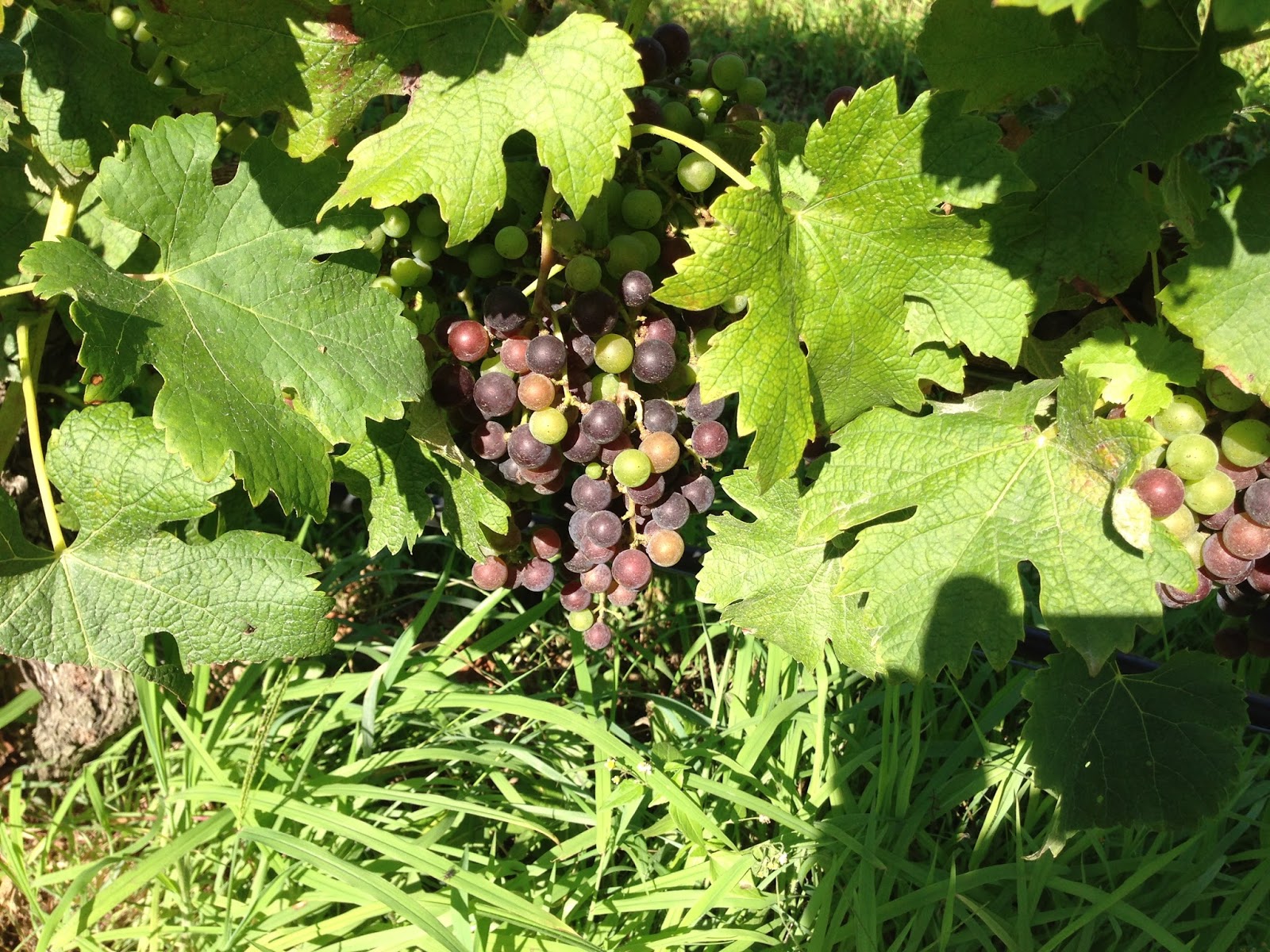
We also took a stroll through the vines. They were absolutely beautiful. I thought perhaps that we were sneaking around, but no: an employee saw us walking through the vines in a spot nowhere near the shop or patio, simply advised that we be careful, and left us alone. It was basically the same way in all three vineyards we visited, and probably countless others. Should I be worried that they were so completely open? The question struck me at first, but after considering the matter, I doubt that there is any cause for concern. It is not only that my seraphic sidekick and I ourselves resisted the temptation to pluck some grapes and munch on them (which, given our hunger, was not easy). It is also that nobody else was causing any trouble. In no place did we see guests messing with anything at all. Consider: at Baiting Hollow alone there were two full coach buses' worth of drunken, hedonistic yuppies hell-bent on throwing caution to the wind (our tour), four or five private limos, an equal number of larger luxury limo buses (one of which chauffeured a bachelorette party, an institution hardly renowned for its promotion of prudent forbearance), and a couple score individual cars carrying young couples, old couples, young children (I do not know why), and mingling singles. Even the six or seven perpetually unattended toddlers failed to lay a finger on so much as a single grape. Besides, the vineyards have all been doing this for decades at this point; if people needed to be kept out, they would be.

What a wonderful day it was! The weather was stunning, the bus ride was luxurious, the vineyards were gorgeous, the wines were delicious, my companion was an angel sent from heaven, and the whole thing took on an extra special air because it was a gift from a friend and a brother. Thank you Mike, and everyone else who has been so kind and generous this past week.

I recommend any of those wineries to people looking for a nice trip out East on the North Fork; or, even better, go get some tickets for the Hampton Luxury Liner and make a whole driving-less day of it. If only you remember to pack a sandwich and some snacks, you are practically guaranteed to enjoy. Cheers!

Thursday, August 15, 2013

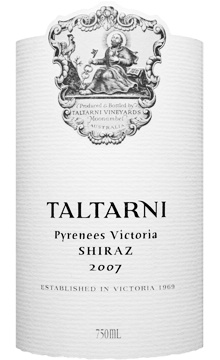
Taltarni 2007 Shiraz

Producer: Taltarni
Name: Shiraz 2007
Varietal: Shiraz
Region: Pyrenees, Victoria, Australia
Vintage: 2007
Tasted: August 6, 2013
ABV: 14%

At my day job, there used to be a woman named Donna who managed the Data Department. Donna has since passed away, but her memory lives on, not least because of her keen wit and fondness for pithy refrains. One in particular stands out: Altogether too often, she would receive a complex question, email back a complete answer, and receive a slew of follow up questions that quite suspiciously dealt with only the material below the second line of her answer. Donna would reply: "Read all the words!" usually with smiley face emoticon or a chuckle in her voice.

It really is sound advice. I find evidence countless times every week of people blowing by the written word, not only in my capacity as Donna's successor, but in fact as the actual transgressor in my everyday life. How often I have skimmed a food label, skipped through a newspaper article, neglected the instructions in filling out a form, even ignored completely the words on my own parking ticket! We are all guilty of failing to read all the words, gaining a modicum of convenience now in exchange for a much larger degree of inconvenience later, and we all pay for it in ways large and small.

In the case of my skimming the Taltarni 2007 Shiraz label, it is, let us say, a muddled issue. On the back label it says that the wine can be either drunk now or else cellared for a decade. I did read the words without urging, but not until after I had drunk the wine, and of course it turns out that drinking the wine anyway was allowed, but maybe I would have preferred to wait if only I had known. Whatever. Let's just blame me and move on.

The wine, in any event, came off exceptionally young. It should be about ready to drink now, but it is not, at least not without breathing for a while. It has a very young, purple-garnet look to it. The liquid is dark, almost opaque. It flirts with non-purpley tones on the outermost edges, but still, it looks like it was bottled last year. The nose offers luscious, pungent, dark reds: pomegranate, black plum, dried cherry. Rosehips and cedar perform a duet, adding not so much another aroma as an extra element to each of the others. But the sweetness is predominant, and luxuriously so.

On the palate, this Shiraz is rich, thick, and heavy. It is as spicy as it is sweet, which is a lot. The dark fruits are out in droves: black cherry, dark berries, and even balsamic. The same spicy/herby underlayer of rosehips and cedar as we had in the nose appears again here in the palate. The tasting notes are pungent. Presently one notices notes of pomegranate pushing out from underneath the rest. Is that oakiness I taste? The wine is smooth, though rather too heavy for itself. It finishes sweetly and strongly (though without pungency or spice) with notes of black plum.

This wine really shows its youth, which is surprising for a wine as old as this. However, I will say that I just love how the fruit notes pass off the baton to one another: fluidly, but not linearly or directly; in rapid fire yet effortlessly; consistently yet not repetitively; with excitement and liveliness; and brimming with personality. Each hand-off is a dance move, an example of art, a unique, creative, kinetic gesture that adds a crucial element of sophistication and maturity to this wine. It is excellently executed on each and every pass, quite remarkably well done.

Even better is this: after breathing for twenty minutes, the wine is a brand new beverage! Aeration really does work miracles; the difference is like that of night and day. The fruits in the aroma have lightened up big time. The nose catches light strawberry, redcurrant, cherry, and pomegranate notes. Of course the wine does not smell super-mature, but it is much more appropriate. The pungency is gone, but the sweetness remains sophisticated - in fact, it is easier to pick up on the complexities now.

The tasting notes are much lighter, too, and perhaps best of all, the body has lightened up. It is still rich compared to many wines - not really light or thin - but no longer heavy or viscous. The fruits lightened up: pomegranate in front, and cherry, strawberry, and berries behind it. The spice is there, but lighter and more fluid, like the rest of the notes. That whole thing about how the various notes interact so wonderfully is even more outstanding now. The finish is delightful, with notes of plum and pomegranate, lasting nice and long without actually overstaying its welcome.

The aeration of this wine produced one of the largest turns-around that I have ever experienced, and it was fantastic. I encourage everyone to try this wine, but not right away. Patience is definitely a virtue here, whether you wait for twenty minutes or for half a decade. Enjoy.

Friday, July 26, 2013

Fernández de Piérola Rioja Reserva 2004

Producer: Bodegas Fernández de Piérola
Name: Rioja Reserva 2004
Varietal: Tempranillo
Region: Rioja D.O.C., Spain
Vintage: 2004 Reserva
Tasted: July 22, 2013
ABV: 13%

Who could not love a Rioja? It really is something special. And unique. More than just its flavors, its style and attitude are all its own. Even its feel on the palate is unique; no other red does dry quite like a Rioja. It is more like another dimension than simple dryness. It is palpable yet not overbearing; distinct yet not distracting; layered yet not uneven; sophisticated yet not cumbersome. The dryness may hint at spice or at texture, and it may be added among other notes or enhance each of them in their own rights. It supports the Rioja, augments it, makes it what it is, makes it special. What it never does is take away from the sweet fruits in the tasting notes - yes, there is sweetness, too - which thrive in leisurely prosperity, mellowly lavishing epicurean luxury upon the palate. This sweetness is also unique; have you ever noticed that Riojas rarely, if ever, offer specific one- or two- fruit analogies in their profiles? The notes appear as medleys of reds with at least five or six fruits vaguely hinted at and exactly zero fruits identified with any semblance of precision, even relative to the subjective art of wine tasting. The brilliant marriage of this fruity sweetness, at once mellow and dynamic, with a dryness that actually sparkles and shines, is what makes a Rioja unique and so keenly delectable. At its best, it is really hard to beat.

The 2004 Reserva by Fernández de Piérola is an excellent example of all of that, and a wonderfully aged one at that. Interestingly, its color is a light garnet hue, so that while the aroma and taste betray the wine's age, the color does not quite do so. It looks a tad younger than it is; not spunky or inexperienced or oblivious, but simply stronger and livelier, as though rounding out its prime. But in the aroma, it becomes clear that the wine is appropriately mature. The notes are light red fruits such as strawberry, redcurrant, cranberry, and others. A vague hint of pear wafts gently around the periphery. The aroma is light, perfumy but not strong. It has the same "oomph" as a spring flower (without any floral notes).

The wine sports a great dryness on the palate. It is a bit tannic and betrays a sense of oak (the wine has aged in both American and French oak barrels). But for the most part the tasting notes are of such red fruits as strawberry, redcurrant, cranberry, red table grapes, and a few vague others. The wine is full-bodied, but not bold or strong. In fact, it is mellow. It just is not fragile or airy, is all. The finish is not dissimilar from the palate, being mostly strawberry and cranberry.

After aerating for twenty minutes, the Reserva is a smidgen more on the ripe side of things (naturally). In the aroma, the hint of pear has given way to a hint of McIntosh apple, but the reds still form the hegemony: strawberry, redcurrant, cranberry, etc. It is more pungent now, but not boisterous, just less shy. Curiously, it has acquired a bit of plum on the nose. On the palate, the body is lighter (by exactly one notch), and so are the reds in the tasting notes. The fruits are the same as before - strawberry, redcurrant, cranberry, red table grapes, and all that - and it is still a bit tannic and oaky. The palate has acquired a slight kick to it, a sort of cedar-like spice which is the dryness evolved. The finish, very nicely performed about the throat and palate, is of strawberry and balsamic.

The Fernández de Piérola 2004 Reserva is a cool, calm wine. It is no slouch, but really what it enjoys more than anything is hanging out and relaxing. The fruits glide gently, suavely, carefree, about the mouth; the dryness offers a depth of character and sophistication of manner; and the body, from the background, holds it all together brilliantly. It is everything a wine should be, and every bit a Rioja. Get some today, and enjoy.

Wednesday, July 17, 2013

Suavia 2009 Soave Classico

Producer: Suavia Azienda Agricola
Name: Soave Classico
Varietals: (unknown)
Region: Soave Classico D.O.C., Italy
Vintage: 2009
Tasted: July 11, 2013
ABV: 12.5%

I thoroughly hate to give a negative review, I really do. It is not a nice thing, and for all I know it may make me an enemy or two. In fact, even if I personally dislike a beverage, as long as objective criteria show it to be of good quality, and a fair amount of people like it for what it is, then I will put my own taste buds aside and write about what the beverage has to offer in its own right.

In the case of the Soave I had the other evening, I really wanted to like it. I was in the mood for a nice white, Soave Classico is a great region and 2009 was a good year there, and this was set to hit the spot. A nice wine, a nice review, badda-bing, badda-boom. Unfortunately, there was not very much to like about this wine once it hit the palate, and I simply refuse to say otherwise here. Sometimes a positive review is just a flat out lie, and in those cases I will not pull a verbal two-step and make the beverage sound good. I cannot, in good conscience, cross that line, however much I may find it convenient to do so.

When reviewing a drink, I like not only to discuss aromas and flavors, but also to study history and tradition, production and industry, and other things that make the world of beverages, and the world as a whole, exciting. For the 2009 Soave Classico by Suavia, what we have to learn ties in directly with its flaws, which are both blatant and unforgivable.

Which is not to say that they are all-encompassing. The first thing that one notices is quite nice: an aroma of tropical citrus, mainly orange and kumquat, and maybe a touch of lychee. It is crisp like a Sauvignon Blanc, fruity like a Chardonnay, and piquant like a Pinot Grigio. The intensity is moderate, respectable. It was all so promising.

The palate is different. The fruits are the same, but now joined by notes of toffee and nuts, especially almonds. There is also a note of apricot and a hint of a whiff of a mist of vanilla. The texture is even, but not smooth - let's say consistent ridges.

But those ridges are nothing more than the alcohol hitting the tongue. It is not verve, spunk, movement, or any other aspect of personality. It is neither give nor take. In fact, the wine is very conspicuously flat in such respects. It lacks that certain something, an aliveness. Perhaps this Soave Classico is not completely a corpse, but it is quite listless. It is almost as though it were not really into being a wine; it just goes through the motions, and quite unconvincingly at that. I found myself not so much enjoying a glass of wine as drinking an alcoholic beverage flavored like one. Even the color, though tinted nicely straw, lacks any and all distinguishing characteristics. It is not so much limpid as boring.

The finish gets even worse, by the way: the wine loses even its taste. Other than a basic, perfunctory note of white grape, there is barely anything there to report.

I dared not hope that a short while of breathing would jolt this sleeping drink awake, but I stuck around to see what would happen, out of curiosity if nothing else. I probably should not have bothered. After twenty minutes of aeration, the wine is pretty much the same as before except without the ridges. The aroma is still pretty nice: smoother, more mellow, full of tropical notes minus the citrus. It is more mellifluous, easygoing, a fun bouquet - the olfactory equivalent of a varied palette of bright, vivid pastels. But then when sipped, the wine has the same issues as before. It offers a pleasant combination of tropical fruits, and the offering stops dead right there. This wine completely lacks presence. I cannot talk to it, much less hear anything from it. The finish does attempt an improvement, offering notes of grapes and nectarines, with a tad of lychee to round it out. But this is way too little, way too late.

They say that one does not appreciate what one has until it is gone. I like to think that I have been attentive to, and appreciative of, the personalities offered up by the wines and other beverages that I have been fortunate enough to taste over the past year and more. But tasting a wine like this, so completely devoid of personality, definitely does help me to understand just how important personality is, and in what ways it is so. A wine is more than just fermented grapes, in the same way that a person is more than just carbon and water. People are awake, alive, active, conscious, and endowed with unique characters and qualities pertaining precisely to that consciousness. In the same way, the flavors and features in any wine worth the name ought primarily to serve as highlights alongside the qualities associated with being alive and having a personality all its own. This 2009 Soave Classico certainly has all of the ingredients, but nothing to let us know that there is anything behind them. And what a shame that is.