Thursday, August 15, 2013

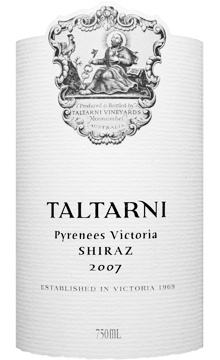
Taltarni 2007 Shiraz

Producer: Taltarni
Name: Shiraz 2007
Varietal: Shiraz
Region: Pyrenees, Victoria, Australia
Vintage: 2007
Tasted: August 6, 2013
ABV: 14%

At my day job, there used to be a woman named Donna who managed the Data Department. Donna has since passed away, but her memory lives on, not least because of her keen wit and fondness for pithy refrains. One in particular stands out: Altogether too often, she would receive a complex question, email back a complete answer, and receive a slew of follow up questions that quite suspiciously dealt with only the material below the second line of her answer. Donna would reply: "Read all the words!" usually with smiley face emoticon or a chuckle in her voice.

It really is sound advice. I find evidence countless times every week of people blowing by the written word, not only in my capacity as Donna's successor, but in fact as the actual transgressor in my everyday life. How often I have skimmed a food label, skipped through a newspaper article, neglected the instructions in filling out a form, even ignored completely the words on my own parking ticket! We are all guilty of failing to read all the words, gaining a modicum of convenience now in exchange for a much larger degree of inconvenience later, and we all pay for it in ways large and small.

In the case of my skimming the Taltarni 2007 Shiraz label, it is, let us say, a muddled issue. On the back label it says that the wine can be either drunk now or else cellared for a decade. I did read the words without urging, but not until after I had drunk the wine, and of course it turns out that drinking the wine anyway was allowed, but maybe I would have preferred to wait if only I had known. Whatever. Let's just blame me and move on.

The wine, in any event, came off exceptionally young. It should be about ready to drink now, but it is not, at least not without breathing for a while. It has a very young, purple-garnet look to it. The liquid is dark, almost opaque. It flirts with non-purpley tones on the outermost edges, but still, it looks like it was bottled last year. The nose offers luscious, pungent, dark reds: pomegranate, black plum, dried cherry. Rosehips and cedar perform a duet, adding not so much another aroma as an extra element to each of the others. But the sweetness is predominant, and luxuriously so.

On the palate, this Shiraz is rich, thick, and heavy. It is as spicy as it is sweet, which is a lot. The dark fruits are out in droves: black cherry, dark berries, and even balsamic. The same spicy/herby underlayer of rosehips and cedar as we had in the nose appears again here in the palate. The tasting notes are pungent. Presently one notices notes of pomegranate pushing out from underneath the rest. Is that oakiness I taste? The wine is smooth, though rather too heavy for itself. It finishes sweetly and strongly (though without pungency or spice) with notes of black plum.

This wine really shows its youth, which is surprising for a wine as old as this. However, I will say that I just love how the fruit notes pass off the baton to one another: fluidly, but not linearly or directly; in rapid fire yet effortlessly; consistently yet not repetitively; with excitement and liveliness; and brimming with personality. Each hand-off is a dance move, an example of art, a unique, creative, kinetic gesture that adds a crucial element of sophistication and maturity to this wine. It is excellently executed on each and every pass, quite remarkably well done.

Even better is this: after breathing for twenty minutes, the wine is a brand new beverage! Aeration really does work miracles; the difference is like that of night and day. The fruits in the aroma have lightened up big time. The nose catches light strawberry, redcurrant, cherry, and pomegranate notes. Of course the wine does not smell super-mature, but it is much more appropriate. The pungency is gone, but the sweetness remains sophisticated - in fact, it is easier to pick up on the complexities now.

The tasting notes are much lighter, too, and perhaps best of all, the body has lightened up. It is still rich compared to many wines - not really light or thin - but no longer heavy or viscous. The fruits lightened up: pomegranate in front, and cherry, strawberry, and berries behind it. The spice is there, but lighter and more fluid, like the rest of the notes. That whole thing about how the various notes interact so wonderfully is even more outstanding now. The finish is delightful, with notes of plum and pomegranate, lasting nice and long without actually overstaying its welcome.

The aeration of this wine produced one of the largest turns-around that I have ever experienced, and it was fantastic. I encourage everyone to try this wine, but not right away. Patience is definitely a virtue here, whether you wait for twenty minutes or for half a decade. Enjoy.

Monday, August 5, 2013

Balcones Baby Blue Corn Whisky

Producer: Balcones Distillery
Name: Baby Blue
Type: Corn Whiskey
Mash: Blue Corn (Atole)
Region: Texas, USA
ABV: 46%
Serving: In a standard whiskey glass, neat

My aunt lives in Dixon, New Mexico. It is a small town sloped gently along some foothills of the Rockies, abutting the eastern bank of the Río Grande between Taos and Santa Fe. Dixon has one road, two wineries, a cafe, open walking trails that rank among the most scenic in the country, and that rare simultaneity of frequent hospitality with zero crowds. It is, without a doubt, a New Yorker's perfect getaway.

Another of Dixon's rightful boasts is its locally grown produce. "Large" farms and individual gardens alike are absolutely everywhere, and the people there lack for nothing when it comes to fresh fruits and vegetables. One delight to which my aunt introduced me on my first visit there was a grain that she called atole. I could not help but remark, amusedly, that the hot cereal she was making from it was blue. "Isn't oatmeal supposed to be tan or something, tía?"

Shame on my younger self! Shame on me now, for ever having been such a foolish child! First and foremost, it was not oatmeal at all; it was cornmeal. It is common in the Southwest to prepare ground blue corn, or atole, into a hot cereal for breakfast, and one mouthful will make quite clear why. To describe its unique flavor is a bit difficult, like describing what turkey tastes like, or what a strawberry tastes like; how can just using words possibly meet such a task? But I can tell you that it is a rich, energetic, giving grain. It is not sweet, but to eat it satisfies a demand for sweetness. It is savory, and fulfilling, like a hot piece of chicken or a crisp, lush apple. Atole was far and away the best hot cereal I had ever tasted, and remains so to this day. Whenever I visit, I ask for it daily; and whenever my dear aunt comes to New York, I beg her to bring me a couple of bags of the Dixon-fresh delicacy (which she is, of course, kind and loving enough to do).

While we are at it, there is another "shame on me" item over here: shame on me for never having considered that atole would make a dynamite whiskey. I say dynamite not only because it tastes great, which it does, but also because it is a vibrant spirit, with the flavors ebbing and flowing about, and a spiciness adding its own degree of kinetics. At least, that seems to be the case with Baby Blue from Balcones Distilling.

First, a note about Maysville, the whiskey bar in Manhattan at which I sampled the spirit. It is only fair to mention this, but I do so eagerly: the servers there are both knowledgeable and patient, to great degrees. They were out of one or two other items that I had wanted to try, and the poor young lady offering me suggestions was met with more than a couple of interruptions and refusals, not at all due to the inadequacy of the whiskey being offered, but simply because I was being more picky and fickle than any mere mortal has the right to be. (A fourth "shame on me," and by far the most shameful.) Still, her confidence and fluency with whiskey won me over, and soon enough I was coaxed to try the Balcones Baby Blue, made in Texas. And I am very glad indeed that it worked out that way.

The whiskey has a deep, rich amber color to it. It looks syrupy to the eye, though it is actually of a standard viscosity. It shimmers in the glass cleanly, smoothly, calmly, as though it enjoys the movement but is no hurry about it at all. Of course, this glimpse of inner tranquility shares a trait with many other sights: it is deceiving.

The nose is piquant; not overbearing, but powerful. The notes are a grand conglomeration of toasted confections and related aromas: toffee, toasted caramel, maple, molasses, black tea, and vanilla. The piquancy and the sweetness are opposites that attract quite nicely, though after a little while, the nose does mellow out some, which is just as well.

The palate contains some varied hints of smoke, but not such that deliver a burned quality to the whiskey; it is more, naturally enough, like a toasted type of thing. I noticed right away that it is spicy. Some of the toasted caramel notes remain, as do the black tea and vanilla; added is popcorn. Halfway through, the sweetness emerges as the principle theme, and distinct notes of toasted caramel and toffee also appear.

However, the spice has by no means subsided. The sweetness may grow to define the body of the whiskey, but the spice is its spirit. It is not spice in the sense of picante cuisine, and it is not an herbal spice. It is, rather, a piquancy of both the alcohol and what I am comfortable assuming to be the local terroir, resulting in a play of the drink about the mouth. Quite as in the nose, the spice and sweetness get along real well on the palate; they float and shimmer and undulate around and through each other simply, basically, easily - and they do so right through the finish, which lingers for a long two seconds.

The result is a delicious, dynamic whiskey that is sophisticated without being complicated; rugged without being harsh; and sweet without sacrificing spice. Quite like the state from which it hails. Have a dram or two this evening, and enjoy.

Monday, July 29, 2013

Ethiopia Amaro Natural Coffee

Name: Ethiopia Amaro Natural
Origin: Yrgacheffe, Ethiopia
Roaster: Oren's Daily Roast
Roast: (unknown)
Varietals: (unknown)
Preparation: Freshly ground, French-pressed, sipped black

It is not too uncommon to encounter a coffee that has a distinct personality like a nice wine, or that is elegantly refreshing as a cup of tea. But to find a coffee that is both things as once, as well as deeply sophisticated as a coffee in its own right, is a rare treat indeed. We have that here with the Ethiopia Amaro Natural from Oren's Daily Roast.

The coffee brews into a dark brown liquid, not ebony, but a true brown. It is solid and deep, which speaks to a certain maturity. Indeed, that is the key word in describing this coffee's personality: mature.

There is plenty of fruit in the nose, as though a bouquet of berries is hanging off the tip of my nose, danging in front of me. There are some florals around the edges. There are also the beginnings of spice notes without the actual spice - would that perhaps be herbiness? The aroma is smooth and robust.

The fruits are forward in the tasting notes as well, as one would expect from an African coffee. But it is less of an in-your-face kind of thing here in the palate than it was in the aroma; here it is more of a delicate, elegant delight. In this way, the coffee seems to take on the leisurely, aristocratic mannerisms of a fine tea; in fact, in my mind's eye I am transported to a Victorian tea garden. Nevertheless, the complexity and depth are most reminiscent of a mature wine. There is a little bit more of an "amaro" air to it than with the standard Ethiopian coffee, but generally speaking it is still rather negligible. In addition to the fruit, there is some nuttiness, some florals, and just a smattering of earth. The coffee is light, slightly tannic, slightly acidic (increasingly so as the cup unfolds), and in all candor, just exquisite. The notes interact in such a way that the whole is considerably greater than the sum of the parts. The fruits and florals follow through to the finish.

I was expecting, especially after experiencing the aroma, for a rich, syrupy, luxurious fruitiness to punch me in the face. Something as light as this, with the air of a tea, could easily have been a disappointment. However, this Ethiopia carries on confidently, naturally, with poise, not oblivious but without any regard to the fact that it might have had a different profile. It is mature, subtle, sophisticated, remarkably graceful, and last but not least, very tasty. It won me over completely, with ease. Pick some up today, and enjoy.

Friday, July 26, 2013

Fernández de Piérola Rioja Reserva 2004

Producer: Bodegas Fernández de Piérola
Name: Rioja Reserva 2004
Varietal: Tempranillo
Region: Rioja D.O.C., Spain
Vintage: 2004 Reserva
Tasted: July 22, 2013
ABV: 13%

Who could not love a Rioja? It really is something special. And unique. More than just its flavors, its style and attitude are all its own. Even its feel on the palate is unique; no other red does dry quite like a Rioja. It is more like another dimension than simple dryness. It is palpable yet not overbearing; distinct yet not distracting; layered yet not uneven; sophisticated yet not cumbersome. The dryness may hint at spice or at texture, and it may be added among other notes or enhance each of them in their own rights. It supports the Rioja, augments it, makes it what it is, makes it special. What it never does is take away from the sweet fruits in the tasting notes - yes, there is sweetness, too - which thrive in leisurely prosperity, mellowly lavishing epicurean luxury upon the palate. This sweetness is also unique; have you ever noticed that Riojas rarely, if ever, offer specific one- or two- fruit analogies in their profiles? The notes appear as medleys of reds with at least five or six fruits vaguely hinted at and exactly zero fruits identified with any semblance of precision, even relative to the subjective art of wine tasting. The brilliant marriage of this fruity sweetness, at once mellow and dynamic, with a dryness that actually sparkles and shines, is what makes a Rioja unique and so keenly delectable. At its best, it is really hard to beat.

The 2004 Reserva by Fernández de Piérola is an excellent example of all of that, and a wonderfully aged one at that. Interestingly, its color is a light garnet hue, so that while the aroma and taste betray the wine's age, the color does not quite do so. It looks a tad younger than it is; not spunky or inexperienced or oblivious, but simply stronger and livelier, as though rounding out its prime. But in the aroma, it becomes clear that the wine is appropriately mature. The notes are light red fruits such as strawberry, redcurrant, cranberry, and others. A vague hint of pear wafts gently around the periphery. The aroma is light, perfumy but not strong. It has the same "oomph" as a spring flower (without any floral notes).

The wine sports a great dryness on the palate. It is a bit tannic and betrays a sense of oak (the wine has aged in both American and French oak barrels). But for the most part the tasting notes are of such red fruits as strawberry, redcurrant, cranberry, red table grapes, and a few vague others. The wine is full-bodied, but not bold or strong. In fact, it is mellow. It just is not fragile or airy, is all. The finish is not dissimilar from the palate, being mostly strawberry and cranberry.

After aerating for twenty minutes, the Reserva is a smidgen more on the ripe side of things (naturally). In the aroma, the hint of pear has given way to a hint of McIntosh apple, but the reds still form the hegemony: strawberry, redcurrant, cranberry, etc. It is more pungent now, but not boisterous, just less shy. Curiously, it has acquired a bit of plum on the nose. On the palate, the body is lighter (by exactly one notch), and so are the reds in the tasting notes. The fruits are the same as before - strawberry, redcurrant, cranberry, red table grapes, and all that - and it is still a bit tannic and oaky. The palate has acquired a slight kick to it, a sort of cedar-like spice which is the dryness evolved. The finish, very nicely performed about the throat and palate, is of strawberry and balsamic.

The Fernández de Piérola 2004 Reserva is a cool, calm wine. It is no slouch, but really what it enjoys more than anything is hanging out and relaxing. The fruits glide gently, suavely, carefree, about the mouth; the dryness offers a depth of character and sophistication of manner; and the body, from the background, holds it all together brilliantly. It is everything a wine should be, and every bit a Rioja. Get some today, and enjoy.

Friday, July 19, 2013

UvaViva Italiana di Poli Immature Grape Brandy

Producer: Poli Distillerie
Name: UvaViva Italiana
Type: Immature Grape Brandy
Mash: Moscato Fior d'Arancio & Malvasia Bianca di Candia grapes
Region: Colli Euganei, Veneto (Moscato) & Rauscedo, Friuli-Venezia Giulia (Malvasia), Italy
ABV: 40%
Serving 1: In a snifter
Serving 2: On the rocks

I tell myself that it has probably happened to everybody. Maybe I am playing mind tricks on myself to rationalize a silliness of youth; but maybe, on the contrary, this really is a normal growing pain. Perhaps my kind readers can tell me if they identify with this: when I first began drinking spirits, and for as long as I continued not paying attention to what was in my glass, all clear brandies tasted just about the same to me. I mean all of them: kirschwasser, slivovica, grappa, everything. The utter strength and pungency of the alcohol, coupled with an uneducated, oblivious palate, brought the distinctions to nearly zero as far as I was concerned.

It has therefore been especially gratifying, as I started to pay attention to, and learn about, the nice drinks in life over the past couple of years, to discover how complex and fascinating brandies are, and what makes them unique. The UvaViva Italiana by Poli is a great case study in such sophisticated grape spirits. It is made with Moscato Fior d'Arancio and Malvasia Bianca di Candia grapes from the Veneto and Friuli-Venezia Giulia (two of the Tre Venezie) respectively, and one gets to know the lands there quite intimately, as the terroir of these regions really comes to the forefront. It was a great choice, this blend.

In a snifter, the UvaViva Italiana has light, fruity, and fun aroma. The pungent scents are, interestingly, those generally associated with red wine: plums and red berries. There is also a strong pear presence. On the palate, it goes down easily, nicely. There are some white wine tasting notes here - lychee, almonds, vague citrus, and emphatic pear notes - that meld together seamlessly with the red wine notes, which remain from the aroma. The brandy is thick and viscous, but it turns to vapor quite easily in the mouth. The finish is mild - it could do a bit better in terms of vigor - but comes off a lot like grappa, which is nice, especially with these ingredients.

On the rocks, the UvaViva Italiana has pears all over the place, in all phases of the experience. The aroma is almost exclusively pear, although it is a bit on the light side. The brandy makes for very easy sipping, with pleasantly middling intensity and viscosity, and a certain crispiness to it. It is quite wonderful. The pear continues its hegemony, though it does here deign to admit other notes into the mix: plums on the periphery and an undercurrent of nuts. One cannot taste the citrus, but still knows it is there. The finish, still a bit too light, is mainly pear.

The brandy does not have any floral tasting notes, but in my mind's eye, while sipping it on the rocks, I am transported to a meadow with trees and brush and rolling hills that are just at the point when flowers are budding and the world is a light green. Obviously, then, this is an ideal springtime beverage, although one can hardly go wrong with it in the summertime. I encourage my readers to get Poli's UvaViva Italiana for themselves, and explore the great depths to which a craft-made, sophisticated brandy can take a willing passenger. Enjoy.

Wednesday, July 17, 2013

Suavia 2009 Soave Classico

Producer: Suavia Azienda Agricola
Name: Soave Classico
Varietals: (unknown)
Region: Soave Classico D.O.C., Italy
Vintage: 2009
Tasted: July 11, 2013
ABV: 12.5%

I thoroughly hate to give a negative review, I really do. It is not a nice thing, and for all I know it may make me an enemy or two. In fact, even if I personally dislike a beverage, as long as objective criteria show it to be of good quality, and a fair amount of people like it for what it is, then I will put my own taste buds aside and write about what the beverage has to offer in its own right.

In the case of the Soave I had the other evening, I really wanted to like it. I was in the mood for a nice white, Soave Classico is a great region and 2009 was a good year there, and this was set to hit the spot. A nice wine, a nice review, badda-bing, badda-boom. Unfortunately, there was not very much to like about this wine once it hit the palate, and I simply refuse to say otherwise here. Sometimes a positive review is just a flat out lie, and in those cases I will not pull a verbal two-step and make the beverage sound good. I cannot, in good conscience, cross that line, however much I may find it convenient to do so.

When reviewing a drink, I like not only to discuss aromas and flavors, but also to study history and tradition, production and industry, and other things that make the world of beverages, and the world as a whole, exciting. For the 2009 Soave Classico by Suavia, what we have to learn ties in directly with its flaws, which are both blatant and unforgivable.

Which is not to say that they are all-encompassing. The first thing that one notices is quite nice: an aroma of tropical citrus, mainly orange and kumquat, and maybe a touch of lychee. It is crisp like a Sauvignon Blanc, fruity like a Chardonnay, and piquant like a Pinot Grigio. The intensity is moderate, respectable. It was all so promising.

The palate is different. The fruits are the same, but now joined by notes of toffee and nuts, especially almonds. There is also a note of apricot and a hint of a whiff of a mist of vanilla. The texture is even, but not smooth - let's say consistent ridges.

But those ridges are nothing more than the alcohol hitting the tongue. It is not verve, spunk, movement, or any other aspect of personality. It is neither give nor take. In fact, the wine is very conspicuously flat in such respects. It lacks that certain something, an aliveness. Perhaps this Soave Classico is not completely a corpse, but it is quite listless. It is almost as though it were not really into being a wine; it just goes through the motions, and quite unconvincingly at that. I found myself not so much enjoying a glass of wine as drinking an alcoholic beverage flavored like one. Even the color, though tinted nicely straw, lacks any and all distinguishing characteristics. It is not so much limpid as boring.

The finish gets even worse, by the way: the wine loses even its taste. Other than a basic, perfunctory note of white grape, there is barely anything there to report.

I dared not hope that a short while of breathing would jolt this sleeping drink awake, but I stuck around to see what would happen, out of curiosity if nothing else. I probably should not have bothered. After twenty minutes of aeration, the wine is pretty much the same as before except without the ridges. The aroma is still pretty nice: smoother, more mellow, full of tropical notes minus the citrus. It is more mellifluous, easygoing, a fun bouquet - the olfactory equivalent of a varied palette of bright, vivid pastels. But then when sipped, the wine has the same issues as before. It offers a pleasant combination of tropical fruits, and the offering stops dead right there. This wine completely lacks presence. I cannot talk to it, much less hear anything from it. The finish does attempt an improvement, offering notes of grapes and nectarines, with a tad of lychee to round it out. But this is way too little, way too late.

They say that one does not appreciate what one has until it is gone. I like to think that I have been attentive to, and appreciative of, the personalities offered up by the wines and other beverages that I have been fortunate enough to taste over the past year and more. But tasting a wine like this, so completely devoid of personality, definitely does help me to understand just how important personality is, and in what ways it is so. A wine is more than just fermented grapes, in the same way that a person is more than just carbon and water. People are awake, alive, active, conscious, and endowed with unique characters and qualities pertaining precisely to that consciousness. In the same way, the flavors and features in any wine worth the name ought primarily to serve as highlights alongside the qualities associated with being alive and having a personality all its own. This 2009 Soave Classico certainly has all of the ingredients, but nothing to let us know that there is anything behind them. And what a shame that is.

Monday, July 8, 2013

Clear Creek Kirschwasser

Producer: Clear Creek Distillery
Name: Kirschwasser
Type: Cherry Brandy
Mash: Oregon & Washington Cherries
Region: Oregon, USA
ABV: 40%
Serving 1: In a snifter
Serving 2: On the rocks

We are lucky in the United States to have a vibrant, thriving craft beverage market. Micro-brewed beer is as popular as ever, and it is only looking up. Not only are some of the finest wines made here, but artisanal wines also abound. (Quite often, of course, that is a distinction without a difference.) Craft coffee roasting is everywhere. Increasing numbers of people are doing increasingly wonderful things with whiskey. Even juices and ades are being made better.

Then we have brandy. Small though it may be, there is indeed a craft brandy presence here in the States. What really sets it apart from its sister movements with other beverages, more than just its size, is the fact that it is not juxtaposed against any major, mass-market domestic versions of the same. There are some European ones, but none from this side of the Pond. We make and consume a zillion gallons annually of cheap, industrial-scale beer, wine, coffee, whiskey, juice, and what have you, with varying degrees of quality. But brandy? The entirety of American brandy production is as pristine as can be. Anyone making it is doing so in no small part out of simple talent and passion.

Clear Creek Distillery in Oregon may trace its inspiration for brandy back to Europe, and its distillation techniques as well. But the importing ends right about there. The ingredients comprising the heart of this brandy are all grown Stateside; and the marriage of opportunity, talent, resourcefulness, and enthusiasm leading to Clear Creek's success, which comprises the brandy's soul, is itself a particularly American phenomenon.

The Kirschwasser is perfectly limpid and colorless; it could easily be confused for water. As is my wont with spirits, I tasted it in a snifter and then separately over ice cubes, so as to experience both its fiery passion and its calm collectedness, and glean all sides of its profile and personality. In the snifter, it emits a pungent aroma of deep cherry notes. There are vague hints of red berries, but they do not break up the nose; the aroma is even and consistent throughout. The palate is less pungent, but bold fruitiness certainly dominates. There are hints of black plum and dark berries. One oddity, of which I cannot make heads or tails: there is no note of nuts to my discernment, and yet I pick up an unshakable impression that if there were such a note, it would have to be of almonds. I have no clue what that is about; my dear readers may make of it what they will. The Kirschwasser's finish, which lingers for a moment or two, but not three, is of cherries. It has medium viscosity, and is smooth, mature, and fruity. It comes across professional with a touch of enthusiasm.

Served on the rocks, the Kirschwasser offers a bright red cherry aroma: fresh, crisp, refreshing. The palate is of cherry and red berries, sweet, with hints of plum and grappa overtones. The body is solid, and the intensity, while moderate, has major lasting power. Those fruity notes, when they hit the throat, do not change or diminish in the slightest; they waft right up to the back of the nostrils as pristine as ever, and even gently cool the sinuses along the way. The finish is of a cherry flavor with a grappa feel to it.

This Kirschwasser would be great any time of year. In the winter, served in a snifter, it can warm up even the iciest evenings with its smooth, viscous pungency; in the summer, served on the rocks, it can make for a great evening with its crisp, fresh fruitiness. Get some today, and experience American artisanal beverage making at its best. And, enjoy.

Wednesday, July 3, 2013

Organic Honduras Marcala

Name: Organic Honduras Marcala
Origin: Marcala, Honduras
Roaster: The Gentle Brew
Roast: Medium-Brown
Varietals: (unknown)
Preparation: Freshly ground, French-pressed, sipped black

This is true of most types of stores, but wine shops are famous for it: One of the benefits of going into a good one is that the shopkeeper can recommend something for anything. Customers will be indulged in their zaniest, most preposterous fancies. Want a sweet red with personality, but maybe not the same old California Cabernet, but still not a radical departure from it, but you really are looking for something different, but not too different, but not the same either? Just ask, it is yours. Hosting someone who is crazy about Loire wines, and you are quite intent on making your famous chicken fricassee that evening, and the wine and chicken must meld together absolutely perfectly, and no you will absolutely not divulge what you put in it to the shopkeep or anyone else outside of the family, and by the way you hate Loire wines so it cannot be too Loire-ish, but it has to be something that this Loire fanatic friend of yours will appreciate along with his mystery meat? Ask, and ye shall receive. Karen MacNeil, author of The Wine Bible, once asked for a wine with the personality of Robin Williams - and was duly directed to one.

I, for the record, am not interested in imbibing any beverage whatsoever reminiscent of Jumanji. However, I do enjoy being able to bounce my more complicated requirements off of expert ears and get good direction. This is true not only of wine but of all things, including coffee. I have found that most of the good craft roasters are glad to oblige such discussion in their stores, and The Gentle Brew is no exception. As the only craft roasters local to me, they have borne the unenviable burden of indulging more of my questions, dithering, and pure indecisiveness than any mere mortal ever should have to. But what can I say? Some days I know what I want; others, I have no hope of independently thinking through the slightest trifle until I have had some darn coffee in the first place.

Recently I asked one of those patient souls to recommend some beans to take home and brew for a review. "Something organic," I specified, "that would be well brewed with a French press." There was little hesitation; my expert friend knew right away what I would want: the Honduras Marcala. It was a brilliant choice.

The Marcala region, by the way, claims a unique bragging right. Nestled in western Honduras - right in the heart of a part of the world with more than a few competing coffee regions - Marcala has the distinction of being the first ever protected denomination of origin for coffee in Central America. The region has taken pride in its coffee production for generations, and continues to be at the forefront of that sector. When roasted properly, its beans can be quite an experience.

The beans from The Gentle Brew were roasted medium-brown, but there is nothing very dark about the liquid in the press. Neither orangey nor blackish, it sports rather a chestnut hue. There were, however, two tones to it, or rather two layers to the one tone: a lighter cloud in the middle is surrounded by an amorphous frame of slightly darker brown. The coffee is not actually separated; that is simply how it looks.

The Marcala's aroma is nutty, with notes of toasted marshmellow, and florals around the edges. It has many notes of a dark roast, but not the feel, texture, or personality of one. As it cools, tannins become more apparent, as does a certain wininess along with it. The palate is moderately tannic, with plenty of fruity notes, but also fairly buttery with an underlayer of light toast. The actual acidity is under control, but flavors of acidic things are dominant. The coffee is light bodied, but smooth and rich in flavor, really no more than a notch or two short of bold - and yet the light body does not seem to mind it very much at all, holding all of those notes just fine. The finish is of white table grapes and toasted marshmellow, an unlikely yet pleasant combination. It is a light and easy finish, wispy almost, quick.

The Marcala straddles the line between medium and dark profiles. It is almost as though the roast did not meet in the middle of medium and dark so much as mix and match elements of each, and discover harmony among them. For such complexity and sophistication to appear in an unblended coffee is rare, and speaks to a true roasting expertise.

The next time that you are out to pick up some coffee (or tea, wine, whiskey...) think ahead of time just how you would like it to be. By no means should you ask for a cup full of your favorite big screen comedian, as that will likely backfire in more ways than one. But think about what makes your usual preference distinct. What else may you be looking for this week? Anything? Why? Ask an expert about it. Learn something about what is out there. Experiment a little! You may find the greatest new thing on earth right under your nose, or you may discover more than you ever knew about why you love your old standard. Either way, it will make coffee better for you, more intimate, more fulfilling. Enjoy.

Wednesday, June 26, 2013

2009 Flor de Viseu Tradition

Producer: Flor de Viseu

Name: Tradition
Varietals: Alfrocheiro 50%; Tinta-Roriz 25%; Touriga-Nacional 25%
Region: Dão D.O.C., Portugal
Vintage: 2009
Tasted: June 18, 2013
ABV: 13%

It was all my fault. I could just chalk it up to a rookie mistake, sure, but it really was poor form, and I ought to own it. You may rest assured that I locked away all of my toys and sat myself in the corner to think about it. The lesson is learned, and the foolish negligence shall not be repeated. Now I know better.

And yet, at the same time, I cannot wholly regret what I did. In addition to learning a valuable lesson, I got to spend some rewarding time with a delightful young wine sporting a keen personality. The transgression, you see, was opening and tasting a wine first, then checking the vintage charts second. Vice versa would have been sensible, an attribute that I have never been accused of having.

By the time that I saw in the charts that the 2009 Dão reds are highly rated but not quite ready, it was a redundant discovery. Upon first sipping - indeed, even upon first gazing at - the Flor de Viseu Tradition, its quality was apparent, but its youth was even more so. The color is well on the purple side of things. The heart of the glass sports a smooth, even melding of ruby and garnet hues, though it takes a moment to discern that because the liquid is very, very deep, dark, opaque.

The nose, too, gives away the wine's youth. At first it is an indiscriminate medley of dark reds, but distinct notes of plums, prunes, and a little bit of cherry emerge. It is tannic. There is also a smack of rhubarb wrapped in spice. In fact, spice-wise, it is like strolling through a forest of cedar and sandalwood. The nose does, however, also betray plenty of latent sweetness.

The palate is of black plums, cherry, and other dark reds. It is rich, sweet, tannic, full-bodied, and undoubtedly fresh. The spice is still there, though understated somewhat. Peripherally, there is some pomegranite and more of that rhubarb. The finish is quite interesting, as the reds lighten up: cherry and strawberry.

But all of this, I fear, may serve to obscure the important qualities of the Tradition more than to illuminate them. The personality, you see, is a distinct pleasure. Here we have a wine like a strong young lad. He is not silent, and not unconfident, but we must be patient in seeking a conversation with him. We get wisps of youthful strength here and there, but they disappear as soon as they ever came about; the wine avoid excess, not out of any utilitarianism, but out of simple habit. Then, when he is ready, this he just starts showing his stuff - the same stuff we always knew he had, but in unexpected places and at unexpected moments. The randomness is almost goofy. And, it is a pleasure to be a part of it. Of course, with all of this give, there is not as much take - the conversation is a bit one-way - but that is not at all inappropriate for a boy. There is plenty of growth yet to come.

Which begs the question: Will all of that growth occur with a little while of breathing, or does the wine need more time in the bottle? Alas, after twenty minutes of aeration, we are met with the bane of every adult's existence: adolescence. The wine is just a tad off the wall now. The nose at first seems plausibly mellower, but then bam! We are back to the spice. The reds may have lightened up, but only a little. The tannins are out in force, and there is a bit of acidity. I note alpine strawberry, plum, dried cherry, and a whiff of watermelon. It really is quite spicy. And, the palate has evolved in quite the same manner. The fruit pulled back a little bit, leaving spice, tannins, and acidity. Not that the fruit disappeared, of course - rhubarb, pomegranite, and strawberry are still there. The finish, astoundingly, is incredibly mild: a tiny dab of spice, some vague fruitiness, and not much else.

So, the wine grew up, but only a little. These are the teenage years. He is still strong, still seeking to charm, and indeed he is well equipped to do so, with occasional success. However, he is less sure of himself, less sure of his identity, of what he wants to be, of how he ought to present himself. He can be recalcitrant at awkward times; at frustrating times. There is dynamism, of a type that is attractive on the surface, but that can be a bit much at intimate levels. But the wine has, at heart, a good personality, and some patience - admittedly, more than may be tasteful (no pun intended) - will yield great reward.

Many wine drinkers prefer to let wine age in the bottle at least a moderate amount before opening and enjoying. Such people should have this wine in about two years, at which point it ought to be absolutely outstanding. In fact, I bought another bottle of this same wine, and taped a note to it saying, "Drink In 2015". But if you cannot wait so long, or are not the type to bother about how mature a bottle of wine is, then there is plenty of joy to be had now. Pair the wine with red meat, heavily herbed fowl, or the cheese of your choice, and enjoy this keen young lad's company.

Monday, June 10, 2013

Starbucks Reserve Cameroon Mt. Oku

Name: Starbucks Reserve Cameroon Mt. Oku
Origin: Mt. Oku, Cameroon
Roaster: (unknown)
Roast: (unknown)
Varietals: Bourbon; Java
Preparation: Freshly ground, French-pressed, sipped black

Well, that time has come. It is hardly inevitable, and yet it has a way of seeming inevitable. To the American coffee reviewer, nothing else could seem like such a trite capitulation to the baser forces of our culture, and like such a keen opportunity to air some strong opinions about an important facet of that same culture, both at the same time. I refer, of course, to a review of Starbucks coffee.

Let me say, I do not dislike Starbucks coffee generally. It is certainly palatable, and indeed I frequent a Starbucks near my day job. It affords a welcome cup of warm caffeination as well as a pleasant atmosphere in which to pass my lunch hour with a book or some homework or what have you.

But see, there is the thing. As much as anything else, what Starbucks has to offer is a coffee atmosphere. It is an ingenious hybrid of Beatnik coziness and corporate professionalism, bringing all types together with what is perhaps the world's most complete menu of coffee preparations, along with treats to eat, a slew of serving options and conveniences, and a consistency both ubiquitous and universal. And the coffee is alright.

But it is not gourmet. It is not craft. Nor could it be. There cannot be corporate efficiency and artisanal roasting in the same ethos. Such huge quantity demanded cannot be satisfied with small-batch crops. The masses cannot be all appealed to with rare, exotic flavors. Certainly, all of that cannot be brought to fruition at Starbucks level profits. Somewhere, sooner or later, something has got to give. Where will the compromise be?

I should have gotten my first clue before even taking the bag off of the shelf. There did not seem to be much point in reviewing one of Starbucks's standard blends, but I noticed lately that they have a line of "Starbucks Reserve", presumably their attempt at craft coffee. I picked up a bag of the Cameroon Mt. Oku. Most bags of gourmet coffee list the date on which the contents were roasted; this coffee had a "use by" date, and let's just say that it was many months in the future. Strike one. The bag also failed to list any varietals other than to assure that it is arabica (the website has the varietals listed), and it does not state any roast profile. Strike two.

Here, I might have thought, "Eh, forget it." If I were just out to get myself something to sip at home, then I certainly would have. But I was determined to see it through with the Starbucks experiment, and this was as good a chance as I was going to get to find a decent bean from them. Best to let it happen. So I brought it home and brewed it. Strike three.

What came out was the most charred coffee I have ever had. One would think that with all of the ado about their "Reserve" coffees, Starbucks (or whoever is roasting it for them) would have at least attempted to find a roast profile that flatters the beans. At least a try. But that did not happen here, at least not with the Cameroon. I can only infer that somebody decided, somewhere along the line, that it would be alright to fall back to the tried-and-trite darker roasting for which Starbucks is known, and then somebody accidently set the roasting machine to "rocket booster" and pressed "take off". It was like brewing and sipping what is left on the underside of a grill's grate soon after a barbecue.

This is a shame, too, because I swear I detected some potential, though it is not easy to say for sure. Sneaking out from behind the rich, mealy charcoal, which utterly dominates 99% of the coffee and all but obliterates any trace of terroir, are: a whiff of florals and nuttiness on the nose; a dab of spice on the tongue; and a hint of fruitiness that, by the finish, is just full enough to identify as white grape. It would not be unlike an Ethiopian if it were roasted properly, and frankly it might well be a very good coffee at that, for all we know.

But it was not roasted properly; it is like a super dark roast except without the usual tannins, smokiness, nuttiness - any flavor at all, really. It is barely identifiable as coffee, even less so as arabica. I would rather have Starbucks's Pike Place, or trendy Verona, or whatever, any day of the week.

But then, unless I am looking for any old convenient coffee while I pass an hour's lunch break, I would rather not go to Starbucks in the first place. The place is not so much for coffee people as for coffeehouse people, because it does not do coffee as well as it does coffeehouses. It does coffee creatively, it does it efficiently, and it certainly does it profitably, but it does not make the actual coffee much better than average. This attempt at putting a pretty label with a fancy tagline on a poor, poor product, and calling it craft coffee, is a shockingly blunt reminder of the fact.